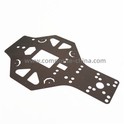


The processing of composite structures differs significantly from that of metal parts, leading to unique processing defects. Numerous studies have observed these defects. Most problems in composite material processing are related to processing quality; the main processing defects are as follows:
Defects caused by mechanical damage include fiber pull-out, delamination, tearing, and the formation of surface cracks in materials.
Defects caused by thermal damage: substrate burns, etc.;
Defects caused by chemical damage: shrinkage of the matrix material and separation of the fiber-matrix interface.
The mechanical and thermal shocks generated during the processing of composite materials caused the aforementioned defects .
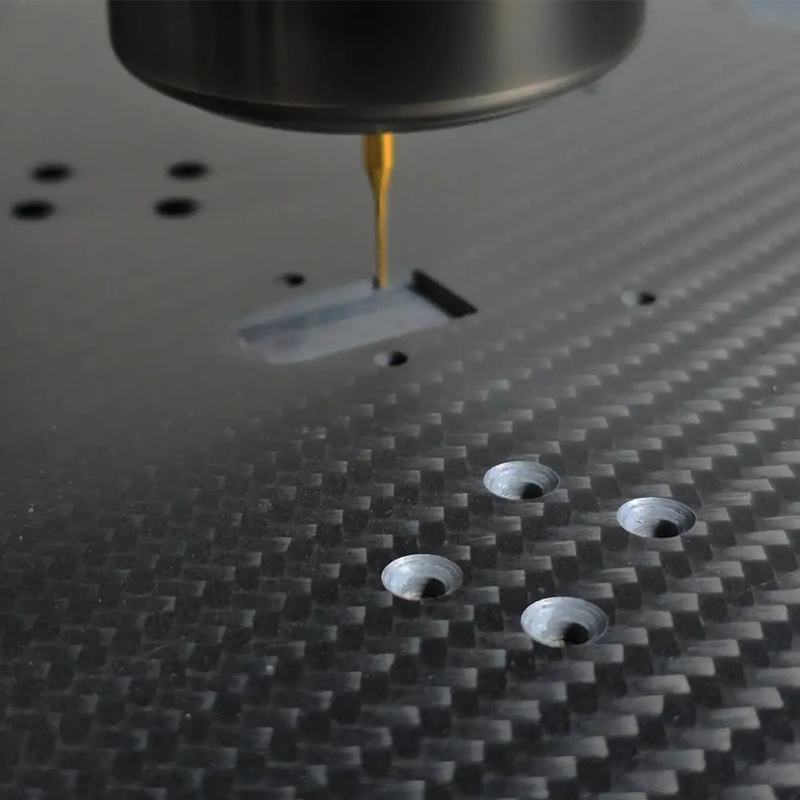
Mechanical damage
1. Fiber burrs
The cutting tool cannot cut the fibers effectively, resulting in burrs. The cut fibers rub against the tool's rake face during drilling or milling. This phenomenon mainly occurs when machining aramid fiber composites.
2. Fiber pull-out and matrix debonding
Unbroken fibers separate from the matrix, resulting in fiber debonding. The cutting edge acts on the machined surface, causing the fibers to bend and displace relative to the matrix. Fiber slippage leads to debonding at the fiber/matrix interface.
Fiber pull-out occurs when the fiber direction is between 15° and 75° to the tool displacement direction. The fiber is subjected to stress that causes tearing between the fiber and the matrix, resulting in pits on the machined surface. This phenomenon is more common when the material is a highly oriented laminate or when the tool sharpness is reduced. This phenomenon will repeat at the same angle between the tool and the fiber in each layer.
3. Layering
Delamination is characterized by the separation of layers along the thickness direction of the composite material and the formation of interlayer microcracks. This form of damage occurs during drilling, especially when the drill bit is about to exit or has already exited the composite material plate. During milling, this phenomenon is related to the geometry of the cutting tool, which separates the surface layer of the material from the core layer.
Interlayer cracks can also be caused by processing, and are mainly determined by the fiber direction and the tool displacement direction.
thermal damage
Localized overheating during composite material processing can lead to thermal damage. Generally, this damage causes carbonization of the thermosetting matrix and melting of the thermoplastic matrix. It can also damage fibers (burning of carbon fibers). This damage occurs in two forms: with or without thermal degradation.