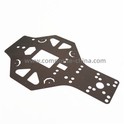


As industries continue to push the limits of performance, efficiency, and sustainability, carbon fiber has emerged as one of the most advanced materials shaping the future of manufacturing. Known for its exceptional strength, low weight, and superior stiffness, carbon fiber is rapidly replacing traditional metals like steel and aluminum across multiple sectors.
What Is Carbon Fiber?
Carbon fiber is a composite material made from thin strands of carbon atoms bound together in a crystalline structure. These fibers are then woven and combined with resin to form a composite laminate that offers remarkable structural performance. The result is a material that is five times stronger than steel yet up to 70% lighter, making it ideal for high-performance and precision applications.
Key Properties of Carbon Fiber:
High Strength-to-Weight Ratio: Delivers maximum strength with minimal mass.
Corrosion Resistance: Withstands harsh weather, chemicals, and UV exposure.
Excellent Stiffness: Maintains dimensional stability under stress.
Thermal Stability: Performs reliably across a wide temperature range.
Aesthetic Appeal: Distinctive weave pattern for modern, high-end appearance.
Applications Across Industries
The versatility of carbon fiber has made it indispensable in many modern applications:
Aerospace & Aviation: Used in aircraft structures and UAV frames for weight reduction and fuel efficiency.
Automotive & Motorcycles: Enhances performance parts, panels, and frames with both strength and style.
Sports & Recreation: Found in bicycles, rackets, and fishing rods for lightweight endurance.
Broadcast & Photography: Carbon fiber poles and tripods ensure stability with ease of handling.
Industrial & Robotics: Square and rectangular carbon fiber tubes provide rigidity for precision motion systems.
Renewable Energy: Applied in wind turbine blades for improved durability and energy efficiency.
The Future of Carbon Fiber Materials
With continuous advancements in production technology and cost reduction, carbon fiber composites are becoming more accessible for mass-market applications. From electric vehicles to architectural structures, the material is setting new benchmarks for efficiency, strength, and innovation.