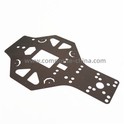


Carbon fiber is a material that has been widely used in aerospace, automotive, and sports industries due to its exceptional properties. It is a composite material made up of thin, strong crystalline filaments of carbon, which are woven together and then set in a polymer resin. The result is a material that is:
Lightweight: Carbon fiber is significantly lighter than traditional materials like aluminum or steel, making it ideal for applications where weight reduction is crucial.
Strong and Durable: Despite its light weight, carbon fiber is incredibly strong and resistant to impact, making it perfect for the demanding conditions drones often face.
Corrosion Resistant: Unlike metals, carbon fiber does not rust or corrode, ensuring a longer lifespan for drone components.
Stiffness: Carbon fiber has a high stiffness-to-weight ratio, which is essential for maintaining the structural integrity of drone arms during flight.
The Role of Drone Arms in UAV Performance
Drone arms are the structural components that connect the motors and propellers to the central body of the drone. They are responsible for:
Supporting the Motors: The arms must bear the weight of the motors and propellers while maintaining stability during flight.
Absorbing Vibrations: During flight, drones experience various vibrations and shocks. The arms must absorb these to ensure smooth operation and prevent damage to other components.
Maintaining Aerodynamics: The design of the arms can significantly impact the drone's aerodynamics, affecting its speed, maneuverability, and energy efficiency.
Given these critical functions, the material used for drone arms can make or break the performance of a UAV. This is where carbon fiber comes into play.
Applications of Carbon Fiber Drone Arms
The benefits of carbon fiber drone arms extend across various industries and applications:
Aerial Photography and Videography: Drones equipped with carbon fiber arms can achieve smoother, more stable flights, resulting in higher-quality footage. The reduced weight also allows for longer flight times, enabling photographers and videographers to capture more content in a single session.
Agriculture: In precision agriculture, drones are used for crop monitoring, spraying, and mapping. The durability and corrosion resistance of carbon fiber arms make them ideal for these tasks, which often involve exposure to chemicals and harsh weather conditions.
Search and Rescue: In search and rescue operations, drones need to be lightweight, durable, and capable of withstanding rough terrain. Carbon fiber arms provide the necessary strength and reliability for these critical missions.
Delivery Services: As drone delivery services become more prevalent, the need for lightweight and durable components becomes even more important. Carbon fiber arms can help reduce the overall weight of the drone, allowing it to carry heavier payloads over longer distances.
Racing Drones: In the fast-paced world of drone racing, every gram counts. Carbon fiber arms offer the perfect combination of lightness and strength, giving racers a competitive edge.
The Future of Carbon Fiber in UAVs
As the demand for high-performance drones continues to grow, the use of carbon fiber in UAV components is expected to increase. Advances in manufacturing techniques and material science are likely to drive down costs and make carbon fiber more accessible to a broader range of users.
Moreover, the integration of carbon fiber with other advanced materials and technologies, such as 3D printing and smart sensors, could lead to even more innovative and efficient drone designs. The possibilities are endless, and the sky is truly the limit.