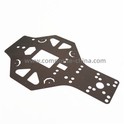


Against the backdrop of increasingly severe global climate change issues, the decarbonization process in the aviation industry is advancing at an unprecedented speed. The most important contribution to the decarbonization of the aviation industry lies in its excellent lightweight characteristics. The reduction in aircraft weight means less fuel consumption required for flight, which in turn directly reduces carbon dioxide emissions. With its unique advantages of "lightweight, high strength, and corrosion resistance", CFRP is used in the new generation of aircraft at a much higher rate than traditional models.
In addition to the significant improvement in fuel efficiency brought by lightweighting, another major advantage of CFRP is its "non-corrosive and non-metal fatigue" characteristics. Aluminum aircraft parts are prone to corrosion, and sometimes even lead to early retirement of aircraft due to corrosion problems; metal fatigue has always been a challenge in aircraft operations.
The application of CFRP is expected to significantly improve these problems, thereby extending the service life of the aircraft and reducing maintenance costs.
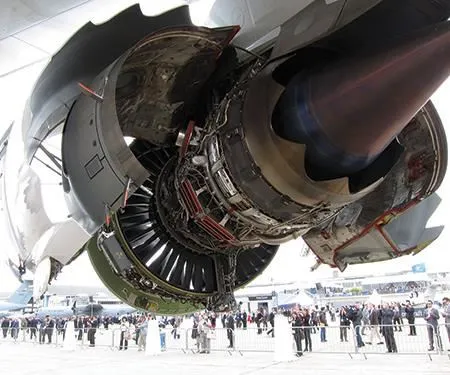
Although CFRP has obvious advantages, its popularization also faces some challenges.
One of the main problems is that the repair of CFRP parts is more time-consuming than traditional aluminum . For short-haul aircraft that need to take off and land frequently, the extended maintenance time may affect operational efficiency. Therefore, the development of faster and more efficient CFRP repair technology is an issue that the industry urgently needs to solve.
Fortunately, airlines and parts manufacturers are actively cooperating. Airlines have the most direct experience of the weight, corrosion and metal fatigue problems encountered by aircraft in actual operation. By sharing this "front-line intelligence" with parts manufacturers , manufacturers can develop and improve CFRP products more targeted, and even proactively propose optimization solutions to aircraft manufacturers such as "CFRP would be better here." This production-use combination model will be the key to promoting the wider application of CFRP in the aviation field.
In the future, we look forward to seeing closer cooperation between airlines and material manufacturers to jointly overcome technical difficulties and fully unleash the potential of CFRP, thereby accelerating the green transformation of the aviation industry and making our skies cleaner.